
Packaging isn’t “just a box.” It’s a sales tool, a protection system, a sustainability statement, and, when it’s done badly, a silent brand killer.
Star Stuff Group builds custom packaging solutions for Australian businesses that need all of that to land at once: shelf impact, reliable protection, responsible materials, and a workflow that doesn’t spiral into endless revisions.
One-line truth: your packaging is doing marketing while you sleep.
Custom packaging in Australia: why it’s not optional anymore
Look, if you’re competing in a busy category, generic packaging is basically volunteering to be ignored.
Custom packaging gives you control over how your product is understood before it’s used. That’s not fluffy branding talk; it’s practical psychology. Humans make snap judgments. Your pack either signals “credible and considered” or “cheap and risky,” and it does it in seconds.
Now, this won’t apply to everyone, but if you sell online as well as through retail, packaging becomes even more loaded. It has to survive freight networks, look good under harsh lighting, photograph well, and still feel “right” in the customer’s hands. Those are different jobs. One structure has to handle all of them, which is why many Australian brands work with specialists like Star Stuff Group to get packaging that performs properly in the real world.
From a commercial perspective, custom packaging also reduces avoidable costs:
– fewer transit damages
– fewer returns
– less “we had to discount it because it arrived scuffed” nonsense
– cleaner repeat ordering because specs are documented and stable
That last point sounds boring until you’ve lived through a rushed reprint.
Shelf impact isn’t art. It’s engineered attention.
Hot take: most “creative packaging” fails because it tries to be clever instead of clear.
Shelf impact is not about cramming in design tricks. It’s about winning the 2, 5 second glance. In my experience, the brands that grow fastest treat packaging like a system: hierarchy, legibility, silhouette, tactile cues, and category expectations, then they decide where to break the rules.
The practical shelf-impact playbook (the bits that move product)
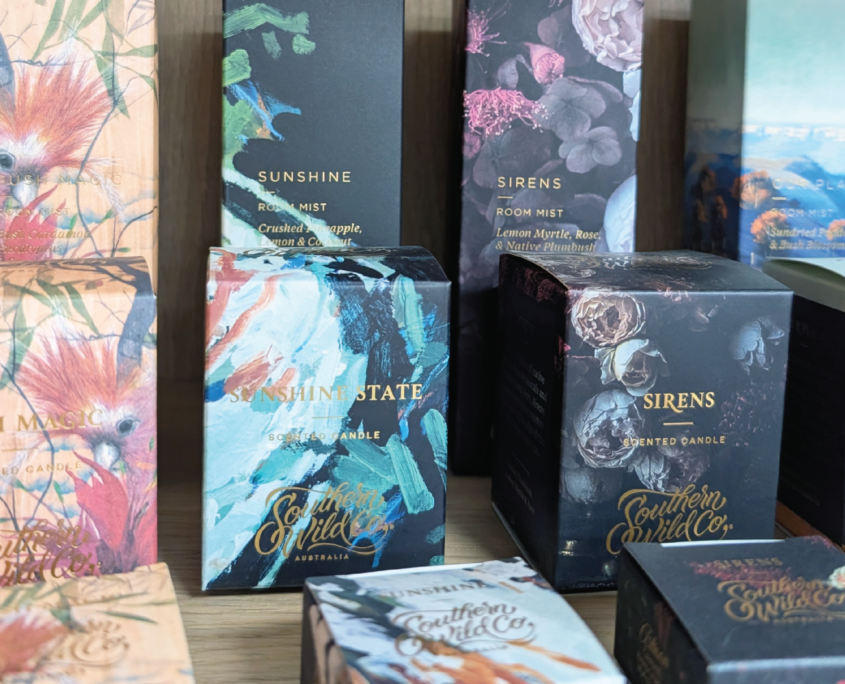
Some of this reads like a specialist briefing, because it is:
– Hierarchy: what’s the one thing the shopper must understand instantly, product type, benefit, or brand?
– Color psychology + category coding: align enough to be recognised, diverge enough to be chosen.
– Contrast for distance legibility: if it can’t be read from 1, 2 metres, you’re paying for decoration.
– Structural differentiation: silhouette matters more than people admit; shapes become memory anchors.
– Finish as a signal: matte, gloss, soft-touch, emboss, foil, each implies something (premium, modern, natural, clinical). Choose deliberately.
Short version? Make it easy to buy.
Visual differentiation techniques (without turning it into a circus)
Star Stuff Group’s approach leans on what retail environments actually do to packaging: flatten it under bright lighting, clutter it with competing messages, and punish anything that’s too subtle.
So you use:
– high-contrast palettes for fast scanning
– intentional color blocking to guide the eye
– tactile elements to increase “pick-up” likelihood (yes, people touch boxes when they’re deciding)
– typography designed for speed, not style awards
When you get those right, you don’t need to shout. The pack feels inevitable.
Sustainability: less virtue-signalling, more verified outcomes
Here’s the thing: consumers can smell vague eco-claims a mile away, and regulators aren’t getting looser.
Sustainable packaging has to be real in three ways:
- the material choice makes sense for the product (barrier needs, shelf life, fragility)
- the supply chain holds up under scrutiny (certifications, traceability)
- the end-of-life outcome is plausible in Australia (recycling streams differ by state and council)
A quick, grounded data point: Australia’s 2022, 23 packaging recycling rate was 60%, with a national target of 70% by 2025 under the APCO framework (source: Australian Packaging Covenant Organisation, Annual Report/Reporting on 2022, 23 outcomes). Progress is real, but it’s uneven, so “recyclable” on paper doesn’t always mean recycled in practice.
What works better than buzzwords:
– lightweighting without compromising performance
– recycled content where it won’t weaken the pack
– certified fibre sources for paper-based formats
– design choices that reduce mixed-material headaches (labels, windows, coatings, those details matter)
Good sustainability is usually boring. That’s why it’s believable.
(And yes, you can still make it look premium.)
Concept to launch: the workflow that keeps projects from drifting
Packaging projects don’t usually fail because of one big mistake. They fail because of ten small delays: unclear briefs, late approvals, endless “minor tweaks,” and someone discovering a compliance issue right before print.
A streamlined workflow isn’t rigid. It’s protective.
Concept → shelf, in a rhythm that works
Start with a brief that’s annoyingly specific:
– product dimensions + weight
– channel mix (retail, e-comm, wholesale)
– protection requirements
– sustainability targets (measurable, not vibes)
– budget guardrails
– timelines tied to real launch dates, not hopeful ones
Then you move with intention: ideation, prototype, validate, lock specs, pilot, scale.
Some teams try to perfect the design before prototyping. I’ve seen that backfire. You learn faster with a physical sample on the table, even if it’s rough.
One-line emphasis: Prototypes are cheaper than reprints.
The milestones that prevent expensive backtracking
Custom packaging milestones should feel like gates, not suggestions:
– feasibility + dieline confirmation
– design intent locked (brand + claims + hierarchy)
– regulatory review (ingredients, warnings, country-of-origin, barcodes)
– prototype testing (fit, durability, shelf visibility)
– pre-press sign-off (color accuracy, finishes, tolerances)
– production + deployment planning (lead times, warehousing, re-order triggers)
If you don’t formalise these, your “timeline” is just optimism with a calendar attached.
Transparent pricing and governance (the unsexy bit that saves you)
I’m opinionated here: a cheap quote with vague inclusions is usually the most expensive option.
Transparent pricing means you can see what drives cost, materials, finishes, tooling, print method, assembly complexity, freight. Governance means change requests don’t quietly explode your budget or push your delivery date.
What a grown-up packaging engagement typically includes:
– line-item clarity (tooling vs unit cost vs freight assumptions)
– explicit revision limits or change-control rules
– sign-off stages with accountable owners
– lead-time commitments tied to approved artwork/specs
This is how you protect launch dates from “just one more tweak.”
Real-world wins (what tends to work in Australia)
Case studies vary, but the patterns repeat.
– Consumer goods: simplifying structures can cut assembly time and reduce damage rates without losing shelf presence.
– Food & beverage: barrier performance and tamper evidence aren’t negotiable, so innovation often happens in smarter structures and clearer on-pack systems, not flashy materials.
– Health & beauty: compact packs routinely lift perceived value while lowering shipping costs (that’s a rare win-win).
– E-commerce heavy brands: optimised dielines + better void-fill strategy usually reduces dimensional weight costs and return rates.
The best projects I’ve seen share one trait: designers, production, and supply chain people talk early, not after the “final” design is presented.
Choosing a packaging partner (a little informal, because it matters)
Ask yourself: do they behave like a vendor, or like a partner who’ll flag problems before they become disasters?
You want evidence of:
– consistent print accuracy and pre-press discipline
– materials knowledge beyond a catalogue pitch
– realistic lead times (with contingencies)
– sustainability claims backed by documentation
– a process that doesn’t rely on heroics
If they can’t explain trade-offs clearly, cost vs speed vs finish vs sustainability, you’re going to pay for that confusion later.
Next steps (no fluff, just the practical path)
If you’re kicking off a custom packaging project with Star Stuff Group (or anyone), do this in order:
1) Write the brief with measurable goals and constraints.
2) Confirm channels and handling conditions early (retail shelf vs courier network are different worlds).
3) Prototype sooner than feels comfortable.
4) Lock specs and governance before you fall in love with a design.
5) Build re-order planning into the launch plan so success doesn’t trigger a stockout.
Good packaging doesn’t just look right. It behaves right, on shelf, in transit, in the customer’s hands, and in your operations. That’s the standard Star Stuff Group is aiming for.
