
If your baby’s swim hat falls off the second they splash, it’s not “cute.” It’s useless.
I know that sounds harsh, but I’ve watched parents spend the whole beach day re-tying floppy hats while the sun bounces off the water like a mirror. The right hat isn’t an accessory; it’s a piece of protective gear.
One line I live by: coverage that stays put beats coverage that looks good in photos.
The non-negotiables (specialist mode for a minute)
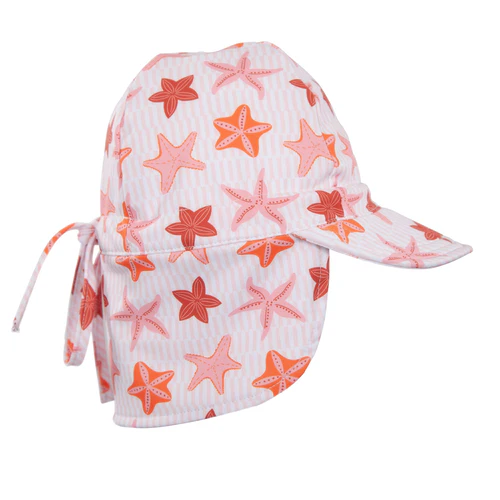
a swim hat for babies should do three jobs at once: block UV, stay on, and keep your child from overheating. Miss any one of those and the “sun-safe” label becomes a vibe instead of a function.
Here’s what actually matters:
– UPF rating: Aim for UPF 50+. Not “UV resistant,” not “sun hat,” not “thick fabric.” UPF 50+ is the clean, standardized signal you want.
– Coverage geometry: A brim alone is fine for quick backyard time. For water, I prefer wide brim + neck flap because reflected UV is real.
– Fit security: Adjustable chin strap or toggle that doesn’t chafe. If it rides up, twists, or blocks vision, your baby will rip it off. Fair.
Quick data point: Water, sand, and even concrete can reflect UV radiation, increasing exposure from angles you don’t expect. The EPA calls out reflection as a meaningful contributor to UV dose in outdoor settings (U.S. EPA, “UV Radiation,” epa.gov).
A question I ask parents: “Where is the sun coming from?”
From above, obviously. But also from the side. And from below when you’re near water. That’s why “a hat with a brim” isn’t always enough.
Brim size: what tends to work in real life
Now, this won’t apply to everyone, but these ranges usually balance shade and wearability:
– Infants: about 3, 4 inches of brim if the hat is lightweight and stable
– Toddlers: 2.5, 3 inches can be easier for active play (less flapping, fewer grabs)
A floppy, oversized brim that collapses into the eyes turns into a constant fight. I’d rather see a slightly smaller brim that stays positioned correctly than a giant one that folds the moment it gets wet.
One-line truth: A brim that flips up in wind protects nothing.
Fabric: the part people hand-wave (don’t)
Look, cotton feels nice. But “feels nice” isn’t the same as “performs well when soaked in pool water and smeared with sunscreen.”
What I like for swim hats:
1) UPF-rated synthetics or blends
Polyester or nylon blends often hold UPF performance well while drying fast. Bonus: they don’t get heavy and saggy as quickly.
2) Tight weave/knit structure
UPF isn’t just about fiber type. Construction matters. A loose, airy weave can breathe beautifully and still let UV through.
3) Softness at contact points
The crown seam, forehead band, and strap edges should be smooth. Babies don’t negotiate with scratchy stitching.
And yes, color plays a role, but not the simplistic version people repeat. Darker colors can absorb more UV, but they may also absorb more heat. In hot climates, I often prefer mid-tone colors with a proven UPF label rather than guessing based on shade alone.
Hats that stay on during splashy chaos
You’re not buying a hat for a posed stroller walk. You’re buying it for the moment your child discovers they can slap the water like a tiny drummer.
Strap design: get picky
In my experience, the best “stays on” setup is:
– Soft, adjustable chin strap
– Low-profile closure (toggles that don’t poke, Velcro that doesn’t scratch)
– Two-point attachment that distributes tension rather than pulling in one spot
Here’s the thing: too tight is a problem. A strap that leaves red marks will teach your baby to hate the hat. But too loose? One wave and it’s floating away.
Move-proof brim (what that even means)
A move-proof brim is one that doesn’t migrate. It holds its shape when wet, doesn’t flip upward constantly, and doesn’t collapse into the eyes. Some brands add subtle structure or internal banding, and while that sounds fussy, it can be the difference between “protected” and “exposed for half the outing.”
Quick-dry + breathable: comfort is a safety feature
Overheated babies don’t quietly tolerate gear. They melt down, yank at straps, and rub their faces. Then you’re stuck choosing between comfort and coverage.
Quick-dry, moisture-wicking fabrics help because they:
– dry faster after dunks and splashes,
– reduce clamminess (which reduces chafing),
– stay lighter, so the hat is less likely to slide.
If a hat has zero ventilation and thick lining, I’m skeptical. A baby’s thermoregulation isn’t the same as an adult’s, and heat stress can sneak up during long pool days.
Care routines that preserve UV protection (and when to toss the hat)
Some UPF comes from the fabric itself, some from treatments, and all of it can degrade with abuse. Salt, chlorine, sunscreen residue, heat… it adds up.
My practical routine:
– Rinse with cool water after each outing (especially after chlorine).
– Hand wash with mild soap when it starts feeling coated.
– Air-dry in the shade (direct sun can prematurely age fabrics).
– Inspect seams and thin spots weekly during “summer season.”
Replace it when:
– the fabric looks thinned or stretched out,
– the brim won’t hold position anymore,
– straps lose elasticity or closures fail,
– fading is severe and the hat has no clear UPF integrity left.
If you’re unsure, err on replacing. A $15, $30 hat is cheaper than sun damage on baby skin.
Layering protection: hat + shade + sunscreen (not one or the other)
A hat is a barrier, not a force field.
For babies under 6 months, most pediatric guidance prioritizes shade and protective clothing; sunscreen use is more limited and should follow your clinician’s advice. For babies over 6 months, broad-spectrum sunscreen on exposed skin can be part of the system, but it still shouldn’t be the only plan.
A layered approach that actually holds up at a beach:
– Hat with real coverage
– UPF swimwear / rashguard
– Shade breaks (umbrella, tent, stroller canopy)
– Sunscreen on what’s still exposed, reapplied as directed (and after water play)
Cloudy days count. Water reflection counts. “We were only out for 20 minutes” can turn into 90.
Fit by age: stop guessing, measure
Manufacturers vary wildly. “12, 24 months” means nothing if your kid’s head is in the 90th percentile (or the 10th).
Use a soft tape:
– Wrap above the eyebrows, around the widest part of the head.
– Compare to the brand’s chart.
– Choose adjustability so you can fine-tune without compressing.
If the hat slides backward and exposes the forehead, it’s too big or the crown shape doesn’t match your child’s head. If it rides up, same story.
Pre-beach / pre-pool checklist (short, because you’ll actually use it)
– Avoid peak UV hours when possible (roughly 10 a.m., 4 p.m.)
– UPF hat on, strap adjusted, brim sitting correctly
– UPF clothing packed (rashguard is gold)
– Shade plan: umbrella/tent/canopy
– Infant-appropriate sunscreen plan (age-dependent), plus reapplication timer
– Extra water/formula/breastfeeding breaks and a dry backup hat if you have one
You don’t need perfection. You need a setup that survives real movement, real water, and real sun.
